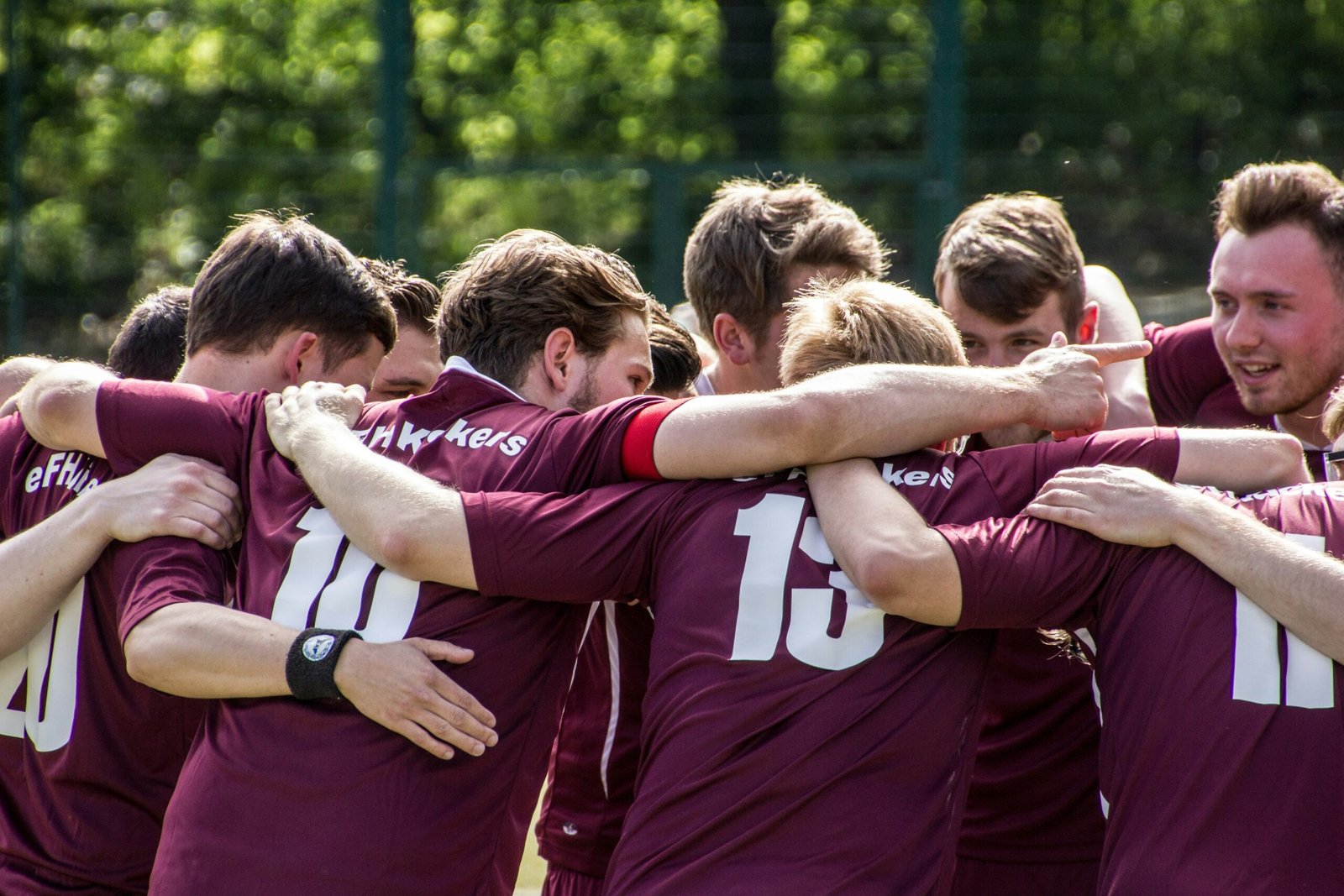
With 12 days to go before their opening match against Senegal, the French team face Ivory Coast this Thursday (9.10 pm) in Nantes, as part of their preparations for the 2026 World Cup. If any players want to stand out and catch Didier Deschamps’ eye, now is the time.
Slowly but surely, excitement is beginning to grip the globe. The 2026 World Cup kicks off in a week’s time, and the French team begins the final stretch of its preparations this Thursday (9.10pm).
Les Bleus take on Côte d’Ivoire in Nantes, 12 days before their first group match against Senegal in New York. But before heading to the United States, they will also face Northern Ireland on Monday in Lille.
Deschamps has almost all his answers
Having been rather spoilt this season, the crowd at La Beaujoire might finally have a reason to celebrate. Les Bleus will be keen to make their mark: some will be looking to earn their place in the pecking order, whilst others will be trying to justify the faith placed in them by manager Didier Deschamps. “They all want to be starters. We will remain mindful of the frustration that this can cause,” the Basque manager warned at a press conference.
But, as the event approaches, the former French captain has already thought of everything. His preferred starting eleven? “Of course I’ve got it in my head, yes… But you never know. There will be two matches between now and then, so things could happen too. (…) Given the specific nature of the situation in the United States, with the gap between each match, we’ll learn more. You too might have a bit of an idea. Out of eleven, you’d be spot on,” smiled the French manager.
A team not so far from the usual starting eleven?
Without the Conference League finalists (Maxence Lacroix, Jean-Philippe Mateta) and the Champions League finalists (William Saliba, Lucas Hernandez, Warren Zaïre-Emery, Désiré Doué, Bradley Barcola, Ousmane Dembélé), who joined the squad later and are expected to start on the bench, with the exception of the Arsenal centre-back, who is being rested, Deschamps is likely to field a near-full-strength starting eleven.
Compared to the team likely to start the World Cup against Senegal on 16 June, Ibrahima Konaté is expected to take Saliba’s place in the centre of defence alongside Dayot Upamecano, whilst Rayan Cherki and Marcus Thuram are expected to complete an attacking line-up in which Michael Olise will, on paper, play in support of Kylian Mbappé, although all these players are likely to be given plenty of freedom.
OL: An Empire Built on Consistency
At the dawn of the 21st century, Olympique Lyonnais established itself as the new benchmark for French football on the continental stage, capitalising on its unwavering consistency. This consistency enabled them to establish themselves as the leading French club in the early 2000s. The fourth instalment of the Maxifoot series stops off in the capital of Gaul.
Olympique Lyonnais have no European titles to their name, not even a final. And yet, Les Gones can claim to have left an indelible mark on the Old Continent.
Whereas Marseille shone with a single peak and Saint-Étienne with a few successful seasons, Lyon have racked up solid Champions League campaigns with remarkable consistency, amassing over 400 points in the UEFA coefficient over the last 30 years.
A decade of consistency
The club has thus reached several quarter-finals – the most frustrating being that of 2005 and that damn penalty not given against Nilmar in extra time against PSV (1-1, 1-1, 2-4 on penalties) – amassing a substantial points tally year after year. The high point came in 2010, when Lyon reached the semi-finals after knocking out Real Madrid (1-0, 1-1) and then Girondins de Bordeaux (3-1, 0-1). Facing Bayern Munich (0-1, 0-3), the club lost, as expected, but confirmed its status as a major force in European football. This campaign, like the previous ones, helped to strengthen an already solid coefficient.
Throughout this golden era, OL amassed a points tally unprecedented for a French club in the modern era. Whereas Reims or even Saint-Étienne saw their achievements under-rated, Lyon benefited from a system that rewarded consistency as much as one-off performances. This momentum enabled OL to quickly overtake their domestic rivals in the UEFA coefficient rankings and open up a significant gap. For nearly a decade, the club single-handedly embodied French reliability in the Champions League.
Lyon stalls, PSG overtakes them
After 2010, however, the Lyon machine began to falter. Less dominant domestically, the club saw its European performances become increasingly erratic. While a few flashes of brilliance remained, such as reaching the Champions League semi-finals in 2020 only to lose to Bayern (0-3), they were no longer enough to maintain the same rate of points accumulation. The Parisian model, backed by Qatari ownership, would eventually overtake them.
Other clubs that defined this era: AS Monaco came close to glory, losing in the 2004 Champions League final. Olympique de Marseille lost two UEFA Cup finals, in 1999 and 2004. RC Lens reached the semi-finals of the UEFA Cup in 2000. AJ Auxerre reached the quarter-finals in 2005. Bordeaux were knocked out by Lyon in the Champions League quarter-finals. Lille had several notable runs: the round of 16 in the UEFA Cup in 2005 and 2006, then the Champions League in 2007.